

Inspired by Frank Cottrell Boyce’s play God On Trial, religious explanations for genocide, and a vision of abundant life.
Does it say [in your covenant] ‘Every once in a while, all bets are off, and I’ll—I’ll flood the place?’ —Moche, God On Trial
God on Trial puts flesh and faces on the old story that Auschwitz prisoners charged God with breaching the Hebrew covenant and conducted a trial to determine God’s innocence or guilt.
Every time I watch it, it resonates with my ancestral history and questions theologians have asked
People under siege facing systematic category-based violence and abuse often find comfort in rites, routine, and respectability. Respectability is an attempt to make some predictable space between a relentless injury and the human soul.
You began the trial. You should complete it. You should follow procedure and quote precedent and be men… Th—They think we are not men, but we are men. They will not take that from us. —An old prisoner, God On Trial
In the face of abuses one can’t control or dodge, it’s easy to find some peace in Robert’s Rules of Order and the Church’s rules of relationship. These rules create an inch of discernible and teachable logic in a chasm of malevolence. They reassure us that, as the old man says, “we are men.” We’re happy to teach our children this. I grew up in it and understand.
It’s a thin comfort, though, our fragile order, our clean consistency. It doesn’t keep the wind out. It doesn’t stop the system. It doesn’t matter who we are: theologians, craftsmen, activists, scientists: when the system comes for People Like Us, it comes for us all.
“Men make their societies in the images of their gods,” Jacques says mid-trial. And Baumgarten, trial judge, realizes how finely designed the dehumanization is: “Nothing here is accidental. The filth is a part of a system… It serves a function. It’s here to take away your dignity.”
It’s the order, the work of making a life and a world regardless of the system, that saves us from the filth. If not for the discipline, wonder, and exhilaration of resisting and asserting and creating new worlds, what would we have?
Respectability claims that our dignity resides in our ability to make and live by order we impose on the chaos of life. It’s a claim that the most sacred aspect of humanity, attacked by a manufactured system, can also be saved by order we’ve manufactured.
The rules of respectability are many, many things, but natural they are not. They are manufactured, and we honor them by consensus. We agree to wear clothes. We agree to wear certain kinds of clothes. We agree to wear certain styles for certain occasions. All these rules are sustained through consensus.
The power of respectability is consensus, not nature or inherent merit. And that’s why we must police its borders: without consensus and policing, respectability falls, and we’re left, as before, with that malevolent system waiting for us at the gate. From functional beginnings comes an idolatrous end: an abandonment of the inherent naked reality for the fig leaves of the made thing.
But there are always rebels—the Get Free Crew. In rebellion against policed consensus, we insist that our humanity isn’t rooted in our performances or our compliance. It’s rooted in inherent dignity. Dignity cannot be taken by a system that did not give it. It isn’t more worthy or more true because we dressed it up and groomed it. We are who we are.
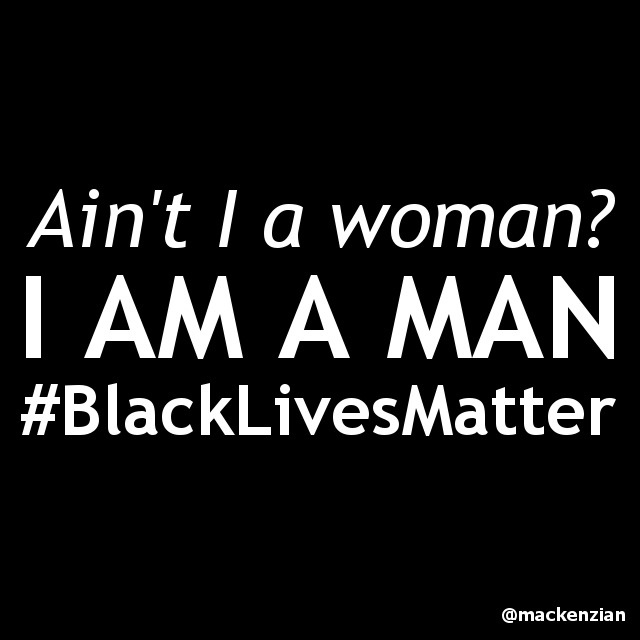
In the 19th Century, Sojourner Truth said “Ain’t I a Woman?” In the 20th Century, sanitation workers said “I AM A MAN.” In the 21st Century, we say #BlackLivesMatter. The contexts of each statement are different, but the core claim is the same: our dignity is not determined by majoritarian politics or consensual whims.
Our dignity is inherent to us, the only thing we truly possess, and the seed of every other fruit we yield in the world. “Life is short,” Toni Morrison told us 40 years ago. “Freedom is in my mind. That’s where one is free.” That’s where our freedom begins.
It’s a masterful turn that closes the God on Trial narrative not with the verdict, but with prayers of those who have judged God. Sometimes that prayer slips out of our mouths like blues. Sometimes we walk it out, chanting “It is our duty to win.” And every day, however the world judges us, we honor our own dignity and build out worlds in which our very being is not a question but a truth.


 (Oreskes/Conway) and
  (Marshall), we have an ongoing discussion about whether the climate movement benefits from debating economic doctrines like market regulation, subsidies, and which fuel sources to reduce or jettison. Must all of these debates be settled before we can take action? Can we afford “to wait?”


